
Texas Doubled Its Oak Wilt Payout to $12,000 Per Property. One Phone Call Starts the Application.
Texas Doubled Its Oak Wilt Payout to $12,000 Per Property. One Phone Call Starts the Application.
Texas A&M Forest Service raised the caps on its oak wilt cost-share program on February 5, 2026, letting one landowner collect up to $12,000 a year toward trenching and tree removal. Work done before the state approves your application is never reimbursed.
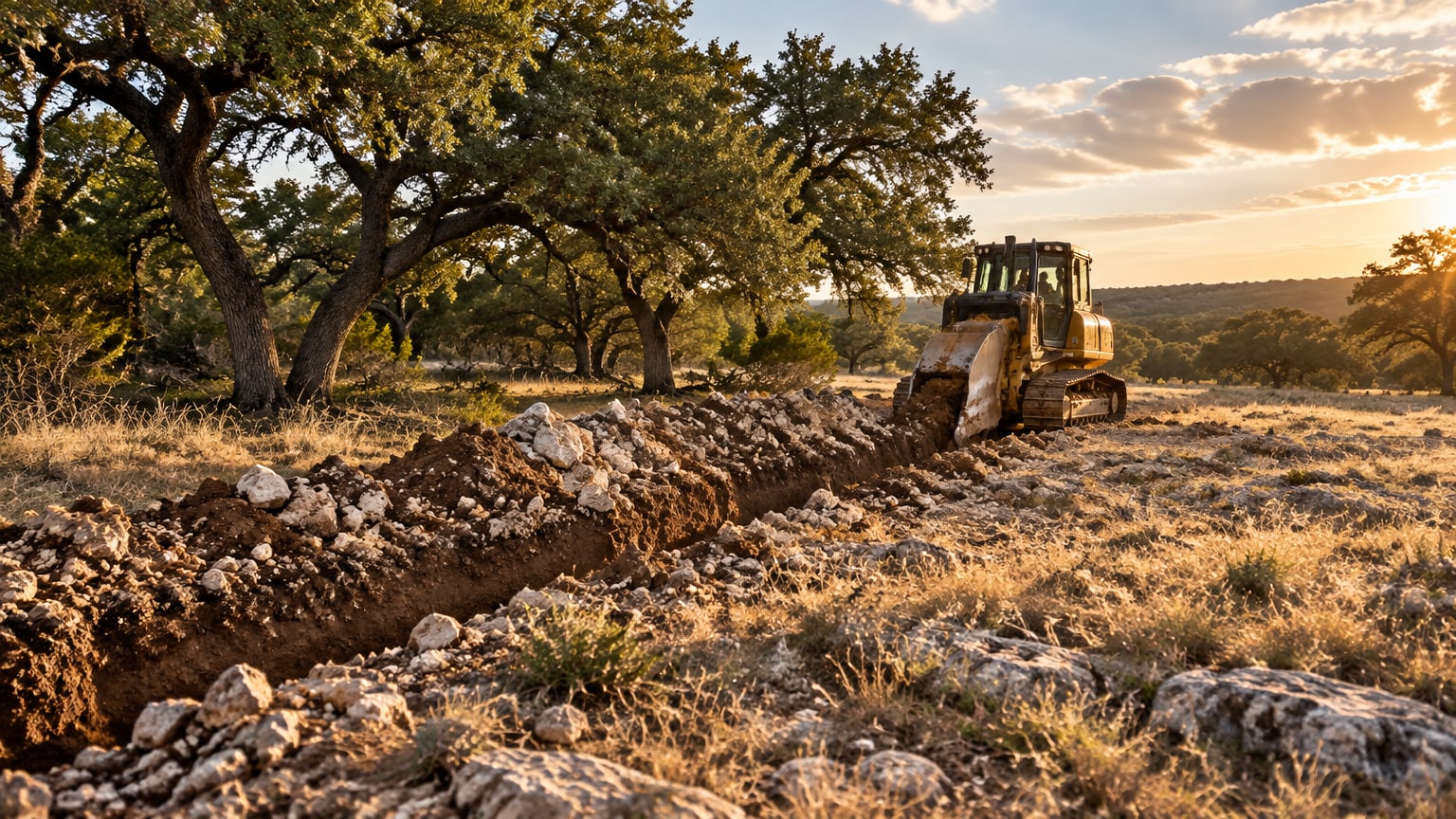
In February, right as oak wilt entered its highest-risk transmission season, Texas A&M Forest Service announced an increase to the Texas Oak Wilt Cost-share program. The cap on trenching reimbursement rose from $2,000 to $5,000 per landowner per year, and the cap on pushing and clearing diseased trees inside those trenches rose with it. Add the standing $2,000 cap for removing infected red oaks, and a single property owner can now receive up to $12,000 in one year, double the old $6,000 maximum (TAMFS, May 2025, vs. the current program page).
The money comes through the Texas Oak Wilt Suppression Program, a federal cost-share funded through the U.S. Forest Service and administered by TAMFS since 1988. The February increase drew a Texas Farm Bureau write-up and a handful of regional TV segments. Eight months later, the bigger caps are still sitting there, while oak wilt, confirmed in 76 Texas counties, keeps moving at roughly 75 feet a year through connected oak roots.
Low uptake predates the increase. A 2019 program budget snapshot obtained through a records request and published by an Austin-area arborist showed that while the suppression project had spent roughly $118,000 on operations, landowners had claimed only about $15,000 in cost-share payments. That snapshot is seven years old, and the program remains one most property owners have never heard of.
What changed: the caps, side by side
The match rate matters as much as the caps. The program pays half of approved costs, so collecting the full $12,000 requires about $24,000 of approved work in a year. Most suburban lots will not reach that. The realistic payout on a typical residential job is somewhere between $1,000 and $5,000, which still covers half the bill. The new caps matter most to Hill Country acreage, where a single disease center can demand several hundred feet of trenching through rock.
What the money buys at 2026 prices
Containment trenching in Central Texas runs roughly $5 to $12 per linear foot, according to a February 2026 pricing guide from Austin tree service We Love Trees, with rockier ground and tighter access at the top of the range. A 400-foot containment line, a common size for a medium disease center, lands between $2,000 and $4,800 before any trees are pushed or removed. Fungicide injections, the other common treatment, cost hundreds of dollars per large tree and need repeating every couple of years, but they are not eligible under this program at all.
Texas A&M Forest Service estimates that losing trees to oak wilt can cut property values by 15 to 20 percent. On a $600,000 home, that is $90,000 to $120,000 of value at risk from a disease the state will currently help you fight for a few thousand dollars. A containment project costs a fraction of that.
Why the rules look the way they do
The conditions follow from how the fungus moves. Oak wilt (Bretziella fagacearum) travels two ways, and TAMFS pays only for the ones that physically interrupt both routes. Above ground, sap-feeding beetles carry spores from the fungal mats that form on red oaks that died the previous year to fresh wounds on healthy trees, so removing those red oaks earns a $2,000 share. Below ground, the fungus moves through connected root systems at an average of 75 feet per year, primarily through live oaks, which is why the big money sits behind trenching. Red oaks can die within a month of infection, so the clock runs fast once a center establishes (TAMFS, February 2025).
The caps and conditions
| Practice | 2025 cap | 2026 cap | Match | Key condition |
|---|---|---|---|---|
| Containment trenching | $2,000 | $5,000 | 50% | Min. 4 ft deep, 100+ ft from symptomatic trees |
| Trenching, multi-neighbor project | $6,000 | $7,500 | 50% | Per project per year, multiple cooperators |
| Roguing / pushing inside trench | $2,000 | $5,000 | 50% | Must occur inside a cost-shared trench |
| Infected red oak removal | $2,000 | $2,000 | 50% | Approved case-by-case, based on mat risk |
| Fungicide injections | n/a | n/a | n/a | Not covered by this program |
| Forester technical assistance | Included | Included | n/a | Confirmation of disease + management plan |
The program pays for
- Trenching that fully contains a confirmed disease center
- Pushing or clearing diseased trees inside the trenched boundary
- Removal of infected red oaks likely to form spore mats
- TAMFS forester site visits, confirmation, and plan design
It does not pay for
- Propiconazole fungicide injections of individual trees
- Any work started before the application is approved
- Treatments installed outside TOWSP specifications
- Pruning, general tree health work, or preventive trenching with no confirmed center
How to claim the money
City programs can stack on top
TAMFS is not the only source of money in the Austin area. Several municipalities run their own oak wilt assistance, and Texas A&M Forest Service lists Austin, Lakeway, Round Rock, Dallas, Houston, and San Antonio among the cities with dedicated oak wilt programs and municipal foresters. Two smaller cities publish explicit reimbursement terms: Sunset Valley pays up to 50% of trenching costs, capped at $200 per tree and $2,000 per project (city program page), and Rollingwood's current program reimburses up to $2,500 per qualifying oak over six inches in diameter, per a June 2026 city staff document. If your property sits in one of these jurisdictions, ask the city forester whether their assistance stacks with TOWSP before you finalize the project scope.
Start in October, trench before February
Oak wilt spreads year-round, and the application follows a set sequence. Apply in the fall, get the forester's confirmation and an approved plan this winter, and have the trench cut before February 1, when the beetle-driven transmission season opens and the oak pruning moratorium runs through June 30. October is also the safest time of year for any oak work on your property: it sits outside the high-risk pruning window, so diagnostic visits, clearing, and site prep carry far less infection risk than the same work done in April. Paint every oak wound immediately, whatever the season.
What the program cannot do
Trenching is the best containment tool available, and it has a measured failure rate. A 2025 study led by Demian Gomez, the same TAMFS forest health coordinator who announced the funding increase, examined 275 trenches drawn from a dataset of 2,124 installed across Central Texas and found that roughly 19% of them eventually saw the disease break out past the line, with deep root zones a major driver of failure (Arboriculture & Urban Forestry, 2025). The program conditions money on correct specs because a trench that is too shallow or too close to symptomatic trees will not hold the disease.
The program also contains the disease rather than curing it. Fungicide injections, which protect individual high-value trees, are not reimbursed, and the homeowner community knows how often treatment alone falls short. In a January 2026 r/AustinGardening thread about a suspected infection, one commenter reported paying roughly $300 to inject a 20-inch tree, with protection lasting about two years. Another, who had treated sixty live oaks in Dripping Springs with Alamo after the 2002 ice storm, reported that all but one were dead by 2010. Injections only delay the loss of individual trees, and severing the root connections protects the rest of the stand.
Box Tree Care provides oak wilt diagnosis, treatment, and removal across Greater Austin, from Leander to Buda, and can coordinate work with TOWSP-approved management plans. Program terms and funding availability are set by Texas A&M Forest Service and can change. Confirm current caps with your county forester before committing to a project.
Sources
- Texas A&M Forest Service, "Texas A&M Forest Service increases funding to combat the spread of Oak Wilt," Feb 5, 2026.
- Texas A&M Forest Service, Oak Wilt Cost Share program page (current caps and guidelines), accessed Oct 8, 2026.
- Texas A&M Forest Service, "Oak wilt cost-share program available to help minimize the spread of oak wilt in Texas," May 19, 2025 (2025 caps; 76 counties; 15–20% property value figure; 75 ft/yr spread).
- Texas A&M Forest Service, "Prevent the spread of oak wilt in Texas," Feb 4, 2025 (disease biology; municipal programs).
- Texas Oak Wilt Cost-Share Assistance, texasoakwilt.org, accessed Oct 8, 2026 (program since 1988; USDA Forest Service partnership).
- Texas Farm Bureau, "Cost share program increased to combat oak wilt spread," Feb 19, 2026.
- Community Impact, "Bee Cave revises resident tree trimming rules as oak wilt season begins," Mar 12, 2026.
- We Love Trees, "Oak Wilt Treatment Cost in Central Texas: A 2026 Pricing Guide," Feb 16, 2026 (trenching $5–$12 per linear foot).
- Gomez, D.F., Loyd, A., De Maria, M., Appel, D., "Deep Root Zone Affects Probability of Oak Wilt Breakouts in Central Texas," Arboriculture & Urban Forestry 51(6), 2025.
- Sunset Valley, TX, Oak Wilt Assistance Program; Rollingwood Oak Wilt Prevention Program, city staff document, June 30, 2026.
- r/AustinGardening, "This is going to be expensive," Jan 10, 2026 (homeowner treatment cost reports).
- ArborCare & Consulting, 2019 TFS Oak Wilt Suppression Project budget records (public records response).